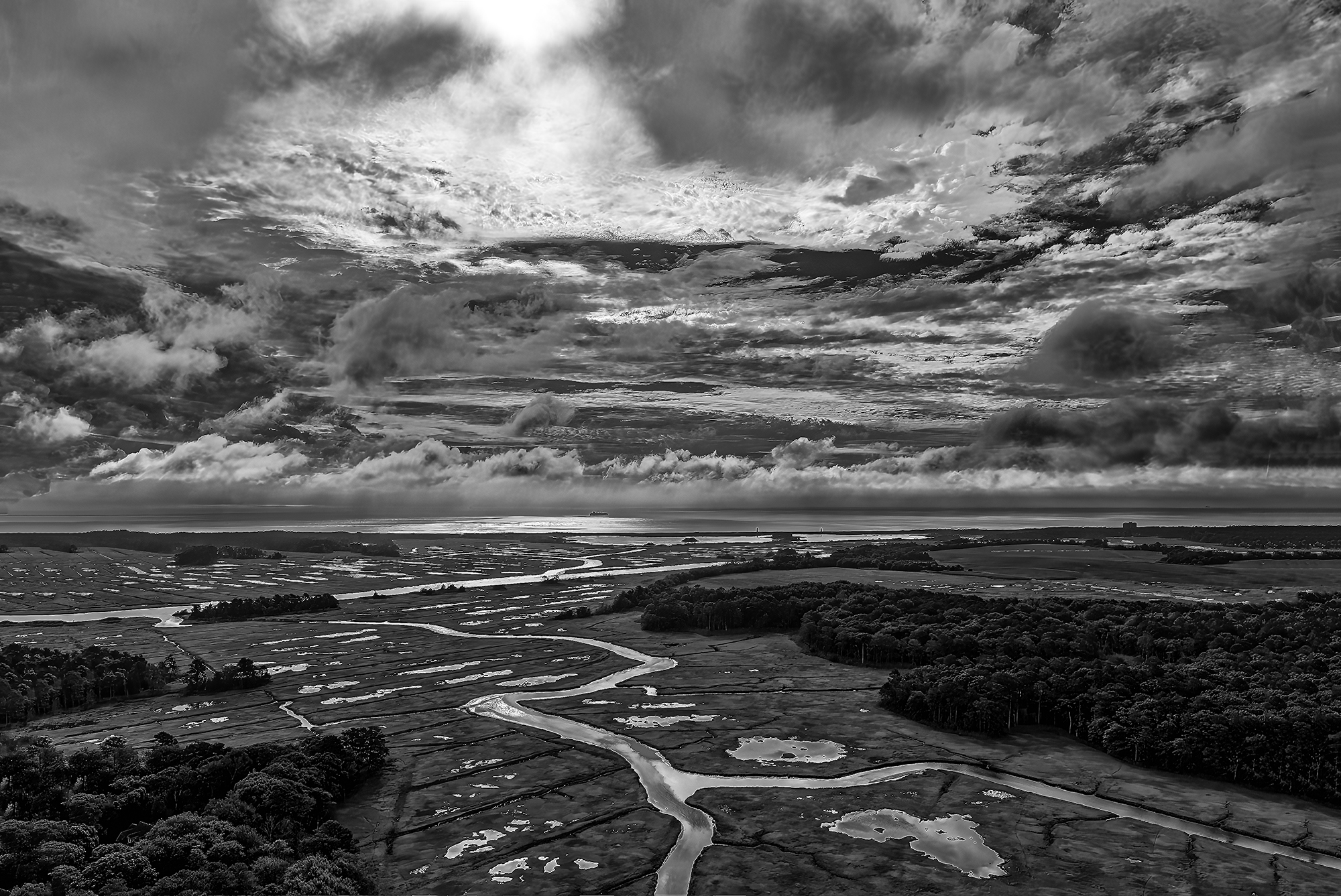
In my college years, early 1970s, I loaded my film camera with either color slide film or black and white negative film. I loved Kodachrome 64 for its rich color and stable base, the slides have not faded or deteriorated in any noticeable way in 50 years. But color positive film required lab processing and the slides were great for Kodak Carousel slide shows but making prints was another big step and somewhat expensive process. Shooting monochrome negative film provided the opportunity to develop and print one’s own photographs right at home, provided you or someone you knew had a darkroom. In my case, I knew someone. It was a fun way to make photographs but over time I started to really love the way black and white communicated subject and mood. I had a home darkroom for many, many years right up until I switched from film to digital cameras. With digital I shoot in color and easily convert to monochrome in Photoshop. Inspiration for the style of monochrome photography I emulate comes from three notable photographers, Ansel Adams (early on-1970s), Clyde Butcher and, more recently, Sebastiao Salgado. All three showcase nature in full exposure range detail, i.e. the Ansel Adams Zone System that goes from 0, pure black, to 10, pure white. I love to capture full tonal range b&w images like the sky and marsh between Lewes and Rehoboth this morning. Dramatic mood, interesting detail and a great subject. It also foreshadows big storms coming in this afternoon.